The long awaited agreement will have a global impact.
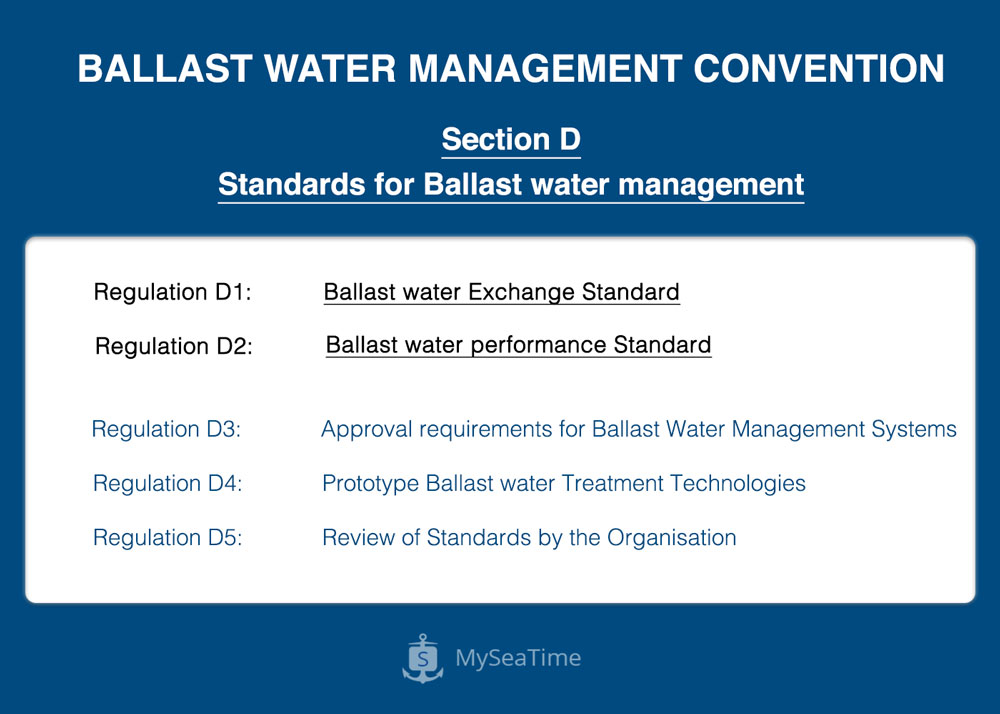
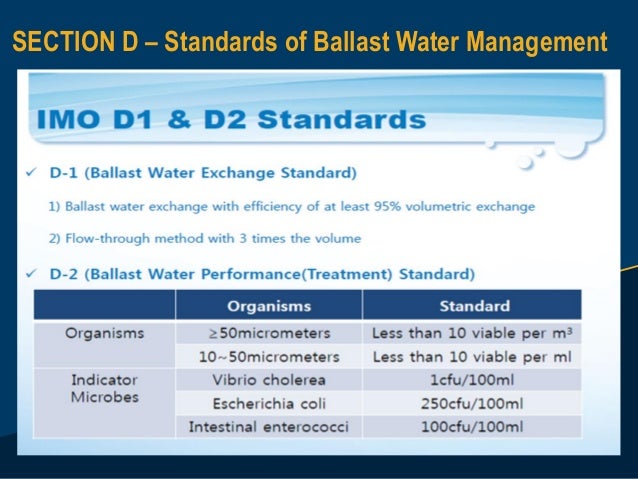
Ballast water treatment systems d1 d2.
The d2 standard is more stringent and requires the use of an approved ballast water treatment system.
When replacing the ballast water at deep sea bwm convention regulation d1 requires that at least 95 of the ballast water need to be exchanged.
An international ballast water management certificate.
The requirement to meet either d1 or d2 standards does not apply to ships that discharge ballast water to a reception facility that has been designed taking into consideration guideline g5.
They may also choose to install a ballast water management system or otherwise meet the d 2 discharge standard but this is not mandatory until the corresponding compliance date.
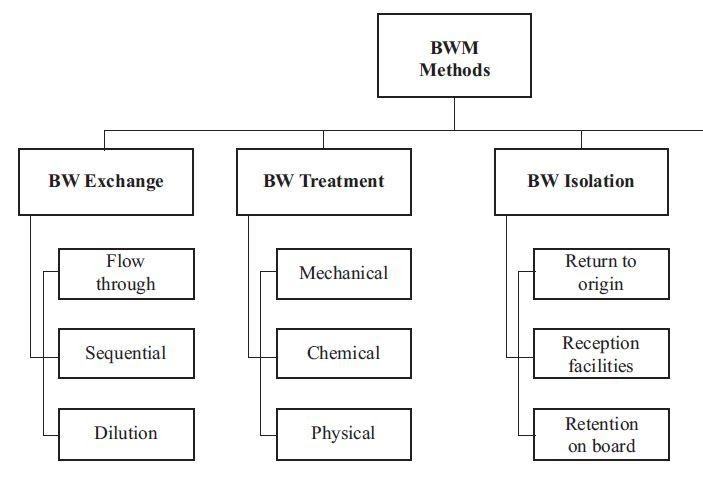
Most of the ballast water treatment system use 2 3 disinfectant methods together divided into different stages.
Ballast water exchange is based on the principle that organisms and pathogens contained in ballast water taken on board from coastal waters will not survive when discharged into deep oceans or open seas as these waters.
The system must ensure that only small levels of viable organisms remain left in water after treatment so as to minimise the environmental impact of shipping.
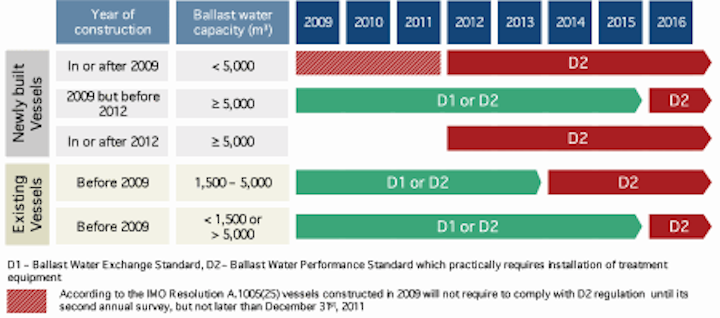
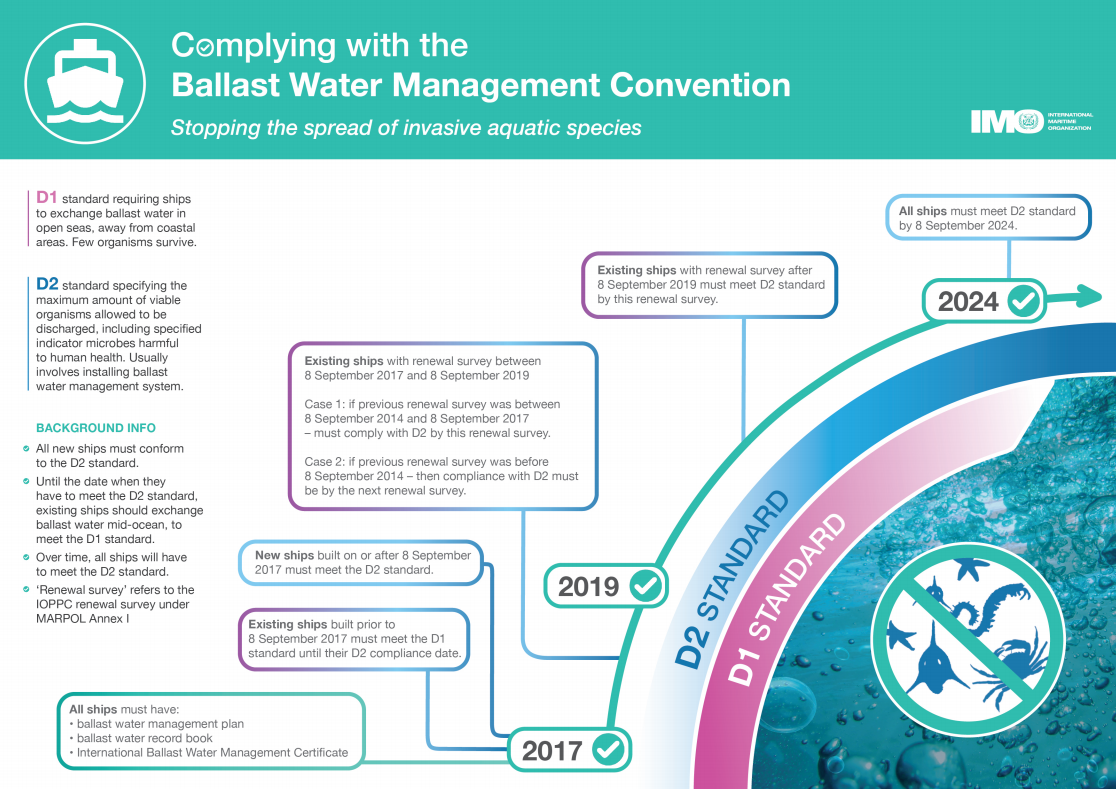
The ballast water management standards are being phased in over a period of time.
E ventually most ships will need to install.
Ships constructed after 8 september 2017 must comply on delivery while existing ships in general must comply by the first iopp renewal after 8 september 2019.
New ships must meet the ballast water treatment standard.
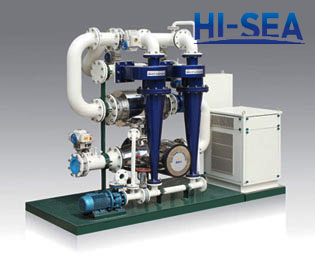
A typical ballast treatment treatment system on ships.
Treatment of ballast water using type approved ballast water management system.
It provides certainty to the maritime community regarding the mandatory.
The conventions implementation schedule means that the use of ballast water exchange which meets the d1 standard as a management method will be replaced by a requirement for ballast water to meet the d2 discharge performance standard usually through the use of a ballast water treatment system.
A general ballast water treatment plant comprises of two stages with one stage using physical separation while the second stage employing some disinfectant technology.
Existing ships should exchange ballast water mid ocean but they will need to meet the ballast water treatment standard by the date of a specified renewal survey.
The first method is to deballast at least 95 of the volume of ballast water from the tank and then re fill it.
When there is a malfunction of the treatment system the vessel needs to perform exchange until the ballast water treatment system bwts has been repaired.
And there are two ways to do that.